
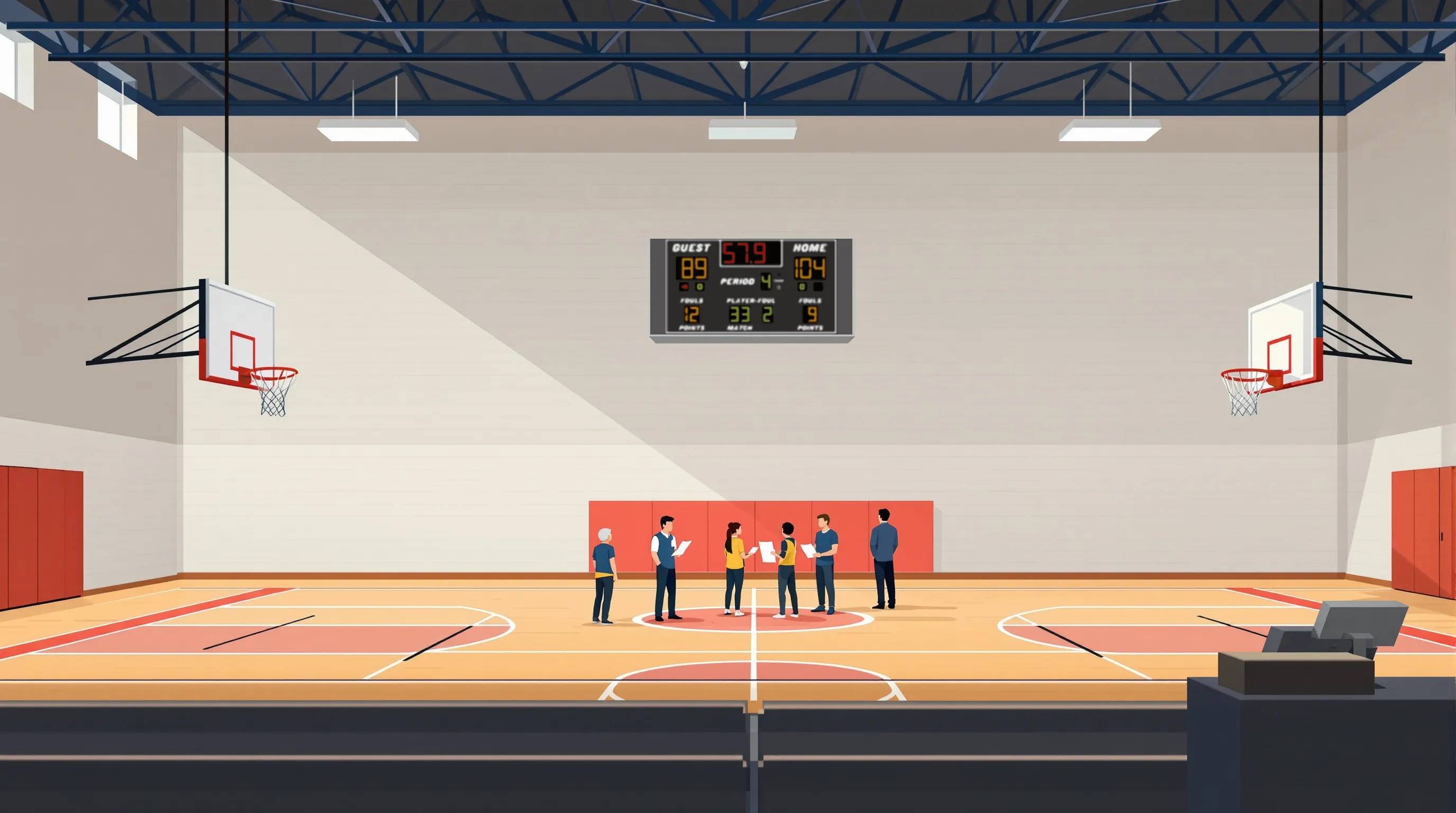
New York's Electro-Mech sales and shipping record (every scoreboard and accessory display shipped to organizations across the state) spans Long Island school districts and upstate sports complexes. Basketball accounts for 229 of those orders. Models that predate the LX series (the rows carrying no LX prefix) still outnumber LX models in the state's full record. The LX2655 leads all New York models with 55 records; the LX2350 follows at 52. Crown Heights Charter School and Manhasset High School each appear more than once in the dataset.
Common questions this article answers, drawn from New York schools, recreation departments, and venue operators:
- What does Electro-Mech's New York sales and shipping record show about pre-LX vs LX models?
- How long do outdoor LED scoreboards last, and what typically drives replacement?
- Why does pre-LX equipment still dominate New York's Electro-Mech record?
Quick Answer
The short answer: Pre-LX scoreboards still outnumber LX-series models in Electro-Mech's New York sales and shipping record, which shows 483 orders going back to 1999 across 219 cities. Basketball leads the record at 229 orders; the LX2655 is the most common model with 55 New York records. For any facility running an older display, the record can say what shipped; it cannot say what condition that equipment is in today.
Quick Answer
New York's Electro-Mech sales and shipping record (which refers to every scoreboard and accessory display the company logged as shipped to a New York organization) shows basketball as the state's leading sport at 229 orders. Baseball follows at 145; football accounts for 53. The LX2655 and LX2350 are the two most common models in New York, at 55 and 52 records respectively.
Pre-LX models still outnumber LX-series scoreboards across the full state dataset. For New York buyers, that fact carries a practical implication. The record says what shipped and when. It does not say what is driving a given scoreboard now, or whether that equipment is still standing, so those questions belong with our support team rather than with the data.
I lead support services at Electro-Mech. Organizations from Friends Academy on Long Island to Cooperstown Dreams Park in central New York appear in the state's record, representing the range of schools, recreation programs, and sports venues that have ordered from Electro-Mech since the late 1990s.
What does the New York Electro-Mech sales and shipping record actually show?
Our sales and shipping records for New York count 483 orders across 219 cities, placing the state 13th of 50 nationwide by volume shipped from our Wrightsville, Georgia facility.
A comparison of 483 New York orders reveals a market that is far more state-wide than most people assume. Of those 483 records, 419 are scoreboards and 64 are accessory displays (shot clocks, play clocks, practice segment timers, and locker room clocks). Because accessory displays typically ship in pairs, the state accounts for 543 individual displays in all. Two model lines account for more than a fifth of the scoreboard total on their own: the LX2655 at 55 records and the LX2350 at 52 are the top models in the state by LX-equivalent grouping, which means the pre-LX 2655, the 2655-C, and the current LX2655 all count as one family. The LX2160 (a shot clock set, not a scoreboard) follows at 31 records, with the LX1060 at 25 and the LX2330 at 19, as of .
New York ranks 13th in Electro-Mech's nationwide record of 24,786 orders. That figure tells you the scope of the record; it does not tell you the condition of each scoreboard today. These are records of what was sold and shipped, snapshotted August 17, 2026. The record does not say why any scoreboard was bought, what it replaced, or whether it is still in active service. Some orders remain in storage for months or years after shipment. Where the record is silent, I will say so rather than speculate.
A common assumption is that New York's scoreboard purchases are concentrated in New York City schools and recreation centers. The reality is different. The 219 cities and towns in the record include Long Island communities, Hudson Valley schools, Southern Tier venues, and upstate facilities: the five boroughs are present but they are not the whole story. That geographic spread matters for a buyer in, say, Bay Shore or Johnson City: your neighbors are very likely running Electro-Mech equipment, which means parts, console compatibility, and service experience are all within reach.
The record also spans more than two decades of orders, going back to 1999. That range matters because the model families changed across it. Older rows carry model strings without the LX prefix (a 2655 or a 2350-C rather than an LX2655), and those earlier families were built on different electronics. That distinction is visible in the record itself, which is the only place I am drawing it from.
Which Electro-Mech scoreboards appear most in New York gyms and fields?
Basketball accounts for 229 of New York's 483 Electro-Mech records, nearly half of all orders. The LX2655 at 55 records and the LX2350 at 52 lead the state's overall count by LX-equivalent grouping.
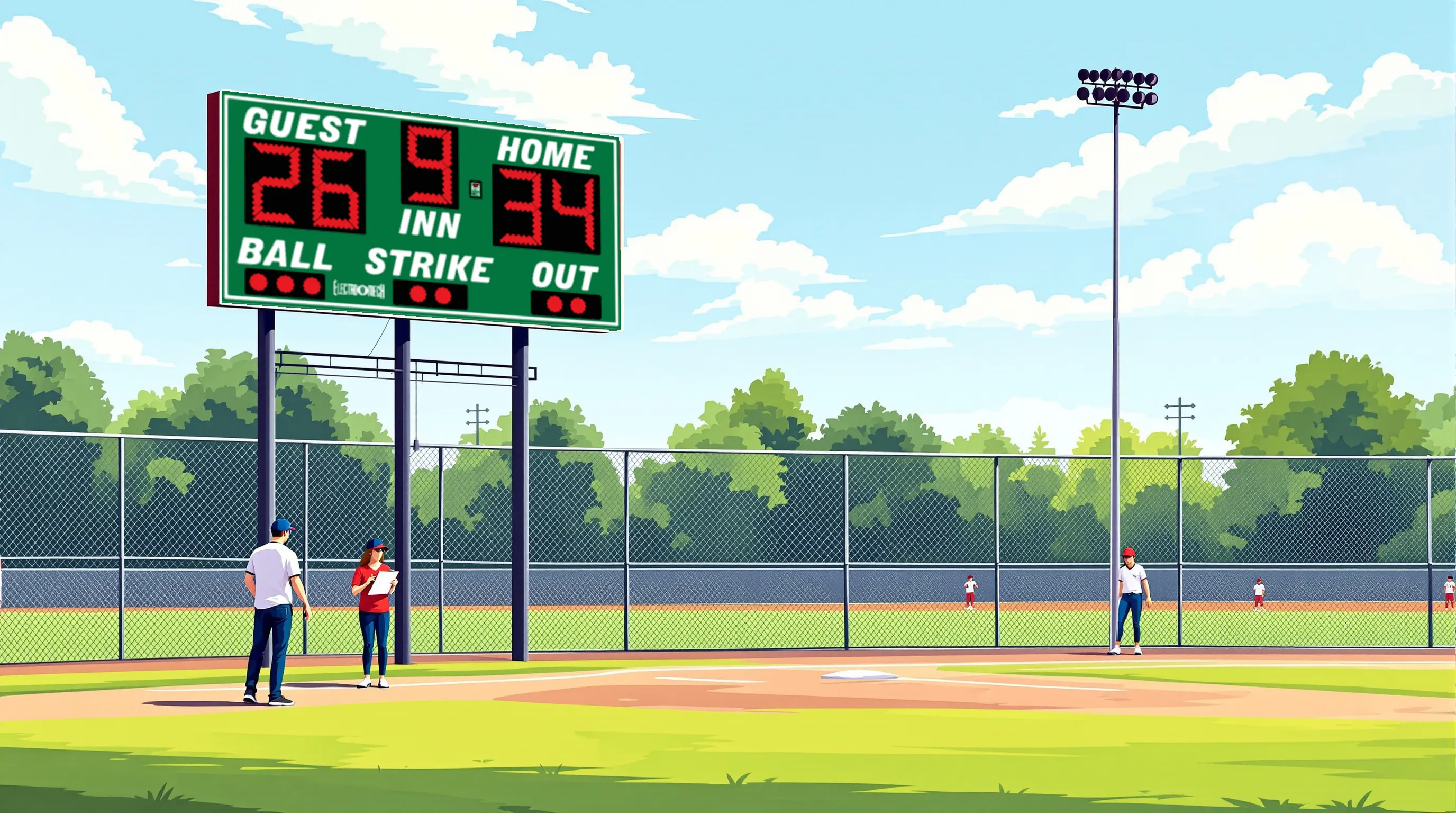
Our sales and shipping records show basketball is by far the dominant sport in New York's record. Of 419 scoreboard records in the state, 229 are basketball. Baseball follows at 145, football at 53, and other sports at 56. That distribution makes sense to me when I look at the state's density of school gymnasiums, recreation centers, and community programs. The gym is often the busiest athletic space a school or parks department operates, and it is frequently the first facility to need a new scoreboard.
The LX2655 and LX2350 dominate the state record for a reason: both are among Electro-Mech's established indoor models and have been shipping since the early LX years. The exact sport coverage and digit heights for a specific unit depend on its model configuration: those figures come from the individual spec sheet for that model and variant, and they differ between them. In practice, confirming those details with our team before ordering is the right approach rather than relying on a general description of the model family.
The LX2160 (a shot clock set, not a standalone scoreboard) appears 31 times in New York's record. Shot clocks ship as a set. The LX1060 follows at 25 records and the LX2330 at 19. Those five are the most-shipped families out of 90 distinct models recorded across the state, counted by LX equivalent, a wide range of configurations across the period.
One limit of the record is worth stating plainly here. Each row carries the organization, the model and the city it shipped to. It does not say which console is driving that scoreboard today, whether the display is still standing, or what condition it is in. So if you are looking at an older display and wondering whether your current console will run a new one, that is not a question this record can answer. It is a question for our support team, with the model number of what you have in hand.
About four of five Electro-Mech customers today choose the ScoreLink RF wireless console system. In a gym, wireless eliminates the need to route a control cable and lets the operator position the console wherever it is most practical. The display typically outlasts the console, and the console can be replaced independently when needed.
How do New York buyers decide between the LX2655 and LX2350?
Sport count and display configuration are the starting point. Both models appear in nearly equal numbers across the state record, which tells you that either can fit the right application - the question is which one fits yours.
The LX2655 leads New York's record with 55 orders; the LX2350 follows at 52. I see this balance across a wide range of organizations, from independent schools on Long Island to municipal recreation programs upstate. Both are indoor multi-sport scoreboards. The difference that matters to a buyer is the specific sport and feature configuration they need from the console - and that conversation is best had directly with the Electro-Mech team rather than inferred from a model number alone.
Console selection is the related decision. Most buyers today choose the ScoreLink RF wireless system over a hardwired cable run, regardless of which display model they select. The console pairs with either scoreboard and can be replaced independently if it reaches end of service before the display does. For a facility already running an older display, bring its model number to our support team before committing to a full replacement.
What do New York buyers need to know about outdoor football scoreboards for high school stadiums?
Football accounts for 53 of 483 New York records (the third-largest sport in the state's Electro-Mech sales and shipping record), behind basketball and baseball.
Football's 53 records represent about 11 percent of all scoreboard orders in the state. That is a smaller share than basketball or baseball, but it is not a marginal one. Outdoor football scoreboards appear across all parts of the state: Long Island schools, upstate districts, suburban programs, and urban parks all have football orders on record. The geographic spread of those 53 orders across 219 cities and towns means Electro-Mech has shipped outdoor football scoreboards to most corners of New York.
One point comes up in most conversations about replacing an older football scoreboard. The primary job of any scoreboard is keeping and displaying accurate information (score and time) for players and officials. When a display starts to fall short of that, the record cannot tell you what comes next: it says what shipped and when, not what is standing today or what is driving it. That part is a phone call rather than a data question, and it is worth making before a budget cycle closes rather than after.
Outdoor football scoreboards also carry different installation requirements than gym scoreboards. They mount on steel posts set in concrete footings, using clamp assemblies, two per post, with the top cabinet installed first. The control console is portable. It is not installed on the post or wired into the structure. Most customers today run ScoreLink RF wireless, which means no buried control cable and no conduit to run between the control position and the scoreboard. Where a cable run is needed, the correct cable is a shielded two-conductor cable with a drain line, laid directly in a trench with a burial jacket, and kept in a separate trench from power runs. The takeaway: wireless is simpler and is chosen by about four of five Electro-Mech customers.
For outdoor applications, digit height is the decision that most directly determines whether the scoreboard does its job. Electro-Mech recommends 25 feet of viewing distance per inch of digit height (a tighter standard than the sign industry's general 50 feet per inch) because a scoreboard carries captions and period indicators that must be read alongside the score. Minimum outdoor digit height is 11 inches. In practice, the farthest seat in a small high school stadium is typically 400 feet or more from the scoreboard, which sets a floor on the digit height a school should be considering.
Digit height reference for a New York venue
Electro-Mech sizes a scoreboard by digit height. The distance to the farthest seat sets the floor.
- The rule: 25 feet of viewing distance per inch of digit height, tighter than the sign industry's general 50 feet, because a scoreboard carries captions that have to be read alongside the digits
- Minimum outdoor digit height: 11 inches on an Electro-Mech outdoor scoreboard
- The distance that matters: in a small high school stadium the farthest seat is typically 400 feet or more from the scoreboard
How long do Electro-Mech LED scoreboards last in outdoor stadiums?
Electro-Mech's LEDs are rated for 100,000 hours of service. The oldest orders in New York's record date to 1999, so some of that equipment has been on a wall or a post for more than two decades.
Fixed-digit LED scoreboards are built for a service life measured in decades, not years. That durability is built into the product's design: the display cabinet sits outdoors year-round through northeastern winters and summer heat, while the control console is portable and stored indoors between uses. Because the console spends most of its time under cover and the display does not, the display typically outlasts the control console. The two components can be replaced independently: a facility that needs a new console does not necessarily need a new scoreboard, and vice versa.
The New York record illustrates this pattern well. Our sales and shipping records show orders going back to 1999. The earliest rows carry model strings without the LX prefix, and orders from the early 2000s, among them outdoor baseball scoreboards, are more than twenty years out from their ship date. How many are still in service is not something the record says, and I will not guess at it. What I can say is that we still take calls about them.
What this means for a buyer weighing a replacement decision: the display's lifespan is not the primary driver of replacement in most cases. Equipment is more commonly replaced because the electronics need updating, the console is no longer serviceable, the facility is expanding, or the digit height no longer meets the venue's needs as the program has grown. The display outlasts most of those other factors. A realistic planning horizon for a new Electro-Mech LED scoreboard is well beyond 20 years of service, which makes the initial selection decision worth doing carefully.
For a New York buyer whose neighbors are running pre-LX equipment (our sales and shipping records for the state show 90 distinct models across 483 orders going back to 1999), the relevant question is not how long the display will last. It is whether the electronics and console can still be supported. When that answer becomes no, the scoreboard and console replacement decision arrives together, not in sequence.
The most common planning mistake I see in replacement inquiries: sizing the scoreboard to the budget rather than to the distance it has to be read from.
Before: sized by the cabinet
A program replaces an aging outdoor display with the smallest cabinet that clears its budget. The farthest seat in the stadium sits more than 400 feet from the scoreboard. At 25 feet of viewing distance per inch of digit height, those digits read clearly from the front rows and not from the back of the stands. Digit size and price move together, so the saving was real. So is the complaint, every Friday night, for the next twenty years.
After: sized by the farthest seat
The program measures from the scoreboard to the farthest seat first, divides by 25, and treats that figure as the floor rather than the target. Buyers frequently go a size larger on purpose, anticipating a field or seating expansion they can already see coming. One purchase, sized for the venue it actually serves.
Why does pre-LX equipment still outnumber LX scoreboards across New York?
Scoreboards outlast most capital planning windows. A display bought in one funding cycle is usually still in place several cycles later.
The record spreads across 219 cities and towns, and that spread is the point: the five boroughs are present, but so are Long Island districts, Hudson Valley schools, Southern Tier venues and upstate facilities. One caution about reading city counts too literally. Each row is filed under the address it shipped to, which is not always where the scoreboard ended up standing (some orders ship to an installing contractor rather than to the school itself). A city total counts orders, not gymnasiums.
Individual buyer history makes the durability argument directly. Crown Heights Charter School, Friends Academy, Nyack College, Shelter Island High School, and Manhasset High School each hold multiple records in New York's dataset. A second or third scoreboard from the same manufacturer, ordered years after the first, is specific evidence: the earlier purchase held up long enough that the organization trusted the same source again. In my experience, facilities with tight capital budgets and limited maintenance staff do not return to the same company for a second purchase unless the first performed reliably.
Greater Binghamton Sports Complex and Cooperstown Dreams Park both appear in the state's record alongside neighborhood school districts. These are venues where timing accuracy is operational. Games run on published schedules, and a failing scoreboard disrupts players and officials alike. Their presence alongside ordinary school gyms shows the breadth of organizations Electro-Mech has supplied across New York. In practice, an older scoreboard still running in a New York gym is not automatically due for replacement. What matters is whether it still keeps accurate score and time, and whether support and parts are still available for it.
Electro-Mech offers over 180 standard models across all sports (scoreboards, timers, and other displays). When replacement does arrive, a matched option is available for almost any sport and venue combination in the state.
Questions This Article Answers
- What scoreboard models appear most often in Electro-Mech's New York sales and shipping records?
- Can a pre-LX console drive a new LX2655 or LX2350?
- Which parts of New York have the highest concentration of Electro-Mech scoreboards on record?
- What should a New York facility know before replacing a scoreboard that predates the LX-series?
Frequently asked questions about Electro-Mech scoreboards in New York
Does Electro-Mech ship scoreboards to New York schools and recreation programs?
Yes. New York is one of Electro-Mech's larger state markets. The sales and shipping record includes orders from Long Island school districts, New York City schools, and upstate programs, including organizations like Friends Academy and Nyack College.
What is a pre-LX Electro-Mech scoreboard?
Pre-LX refers to the older model families in the record (the rows whose model strings carry no LX prefix, like 2655 or 2350-C). They predate the LX series, were built on different electronics, and many remain in service today.
Does the record say what console is running a scoreboard today?
No. Each row carries the organization, the model and the city it shipped to, and nothing about what drives it now, whether it is still standing, or what condition it is in. Whether an existing console will run a new display is a question for our support team, with your model number in hand.
What is the most common Electro-Mech scoreboard in New York gyms?
The LX2655 leads the state with 55 records in Electro-Mech's dataset; the LX2350 follows at 52. Both are indoor multi-sport scoreboards used primarily for basketball in New York schools and recreation centers.
How long does an Electro-Mech LED scoreboard last?
Electro-Mech's LEDs carry a 100,000-hour rating. The outdoor display typically outlasts the control console, which is stored indoors and tends to reach end of service life first. The console can be replaced on its own: the display does not have to go with it.
Key Takeaways
- Size by the farthest seat, not by the cabinet. 25 feet of viewing distance per inch of digit height, with 11 inches the outdoor minimum. Digit size and price move together, and buying too small is the mistake that lasts.
- Basketball drives the New York record. Indoor multi-sport scoreboards (the LX2655 and LX2350 lead the state) cover the most venues in a single purchase.
- Wireless is what most buyers choose. About four of five Electro-Mech customers take the ScoreLink RF system instead of running a control cable.
- Build four to six weeks into your planning, and know it can stretch past twelve. Electro-Mech builds every scoreboard to order; nothing ships off the shelf.
The New York record supports one consistent conclusion: Electro-Mech fixed-digit displays last. The pre-LX base persists not because New York facilities resist change but because the outdoor displays are still running. The console, stored indoors between uses, is more likely to reach the end of its service life first. That asymmetry is where most replacement conversations begin.
For a New York buyer weighing a replacement, I'd start with the distance to the farthest seat and the digit height that distance calls for, then bring the model number of what you have to our support team before planning anything further. When replacement does make sense, Electro-Mech's support team can help select the right model for the sport and the facility. Every scoreboard is built to order. Lead time is typically four to six weeks and can stretch beyond twelve; a custom configuration carries no automatic time penalty of its own.
How can Electro-Mech help New York buyers choose the right scoreboard?
Electro-Mech has supplied scoreboards across New York since 1999, from Long Island schools to upstate recreation facilities. The family-owned manufacturer, in business since 1963, builds every scoreboard to order and backs it with a five-year limited warranty. The support team can advise on model selection, console compatibility, and wireless options.
Request a Quote
Related Articles
Written by
Chap McMichael
Vice President of Support Services, Electro-Mech Scoreboard Company
Chap McMichael is Vice President of Support Services at Electro-Mech Scoreboard Company, the family-owned manufacturer that has built scoreboards in Wrightsville, Georgia since 1963.
Connect on LinkedInSummarize This Article With AI
Open this article in your preferred AI engine for an instant summary.